eFoil Stabilizer Angle of Attack: The Small Adjustment That Changes Everything

eFoil Stabilizer Angle of Attack: The Small Adjustment That Changes Everything
The stabilizer's angle of attack determines how your eFoil sits in the air – and with it, where you stand on the board. Understanding this angle lets you fine-tune your setup to match your riding style, weight, and conditions. Ignore it, and you'll find yourself fighting an awkward body position at speed.
The tool you need is deceptively simple: a small plastic wedge called a shim, slipped between the fuselage and the stabilizer wing. Its effects are anything but simple.
The right setup starts with the right shim – the Aerofoils Stabilizer Shim Set includes all three thicknesses for precise tuning.
What the Stabilizer Actually Does – and Why the Angle Matters
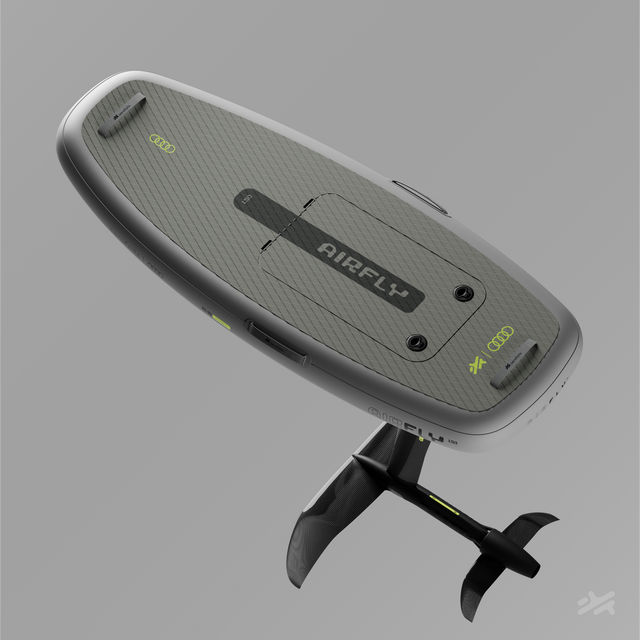
The stabilizer – sometimes called the rear wing or tail wing – is the smaller wing at the back of your eFoil system. It generates downforce: a downward-directed force at the tail. That might sound counterproductive, but it's physically essential. The front wing generates lift that pushes the entire system upward and tilts it slightly nose-up. The stabilizer counters that rotation and keeps the board level in the air.
Without the stabilizer, the nose would pitch up uncontrollably. The balance between front wing lift and stabilizer downforce determines how stable, fast, and responsive your eFoil flies.
The stabilizer's angle of attack (AoA) describes the angle at which the rear wing is aligned relative to the fuselage. Even minimal changes of just one degree produce measurable effects on ride feel, body position, and top speed.
What a Shim Is – and How It Changes the Angle
A shim is a wedge-shaped plastic part that is clamped between the fuselage and the stabilizer wing. Depending on its shape and thickness, the shim changes the angle at which the stabilizer sits – and therefore its angle of attack relative to the front wing.

The Aerofoils Stabilizer Shim Set contains three shims in different thicknesses: -1, +1, and +2. These figures refer to the degree of deviation from the neutral setup. Installation takes just a few minutes – swap the shim, reattach the wing, done.
Important: only change one variable at a time. If you adjust the shim and the mast position simultaneously, you won't be able to tell which change caused which effect.
The Problem Without a Shim: Body Position Shifts With Speed
Without shim adjustment, many riders run into a specific problem: the faster the eFoil goes, the further forward they have to shift their weight to keep the nose down. At moderate speeds, this feels manageable. At high speed, the body position becomes increasingly strenuous and unnatural.
The reason lies in aerodynamics: as speed increases, the front wing generates more lift. The system wants to pitch up and forward. The rider compensates by loading the front foot – a stance that costs energy and makes control harder.
A correctly set shim can fix this. The goal is a relaxed, centred body position that doesn't change with speed.
Negative Angle of Attack: More Downforce, Earlier Takeoff
A negative shim increases the stabilizer's downforce. This means the rear of the system is pulled down more strongly, and the nose of the board tilts downward. The overall system generates more effective lift as a result and rises out of the water at lower speeds.

That might sound like a beginner-only feature – but it isn't. A negative angle of attack also means the rider feels more pressure on the front foot. The ride is more stable and predictable, but drag increases. The consequence: lower top speed and reduced battery range compared to a neutral or positive setup.
Positive Angle of Attack: Less Drag, More Speed
A positive shim reduces the stabilizer's downforce. The rear wing runs flatter, generates less opposing force – and therefore less drag. The result: higher top speed, more efficient gliding, greater range per battery charge.
The trade-off is a more reactive, slightly twitchier feel. The board responds more sensitively to weight shifts. Underload the front foot and you risk the nose climbing too high. This demands active, conscious riding – and for experienced riders who know their setup, that's exactly what they're after.
The +2 shim is the most aggressive option in the Aerofoils Shim Set: maximum efficiency, maximum speed, minimum margin for error. Advanced riders in freerace or Competition trim benefit the most here.
Angle of Attack and Body Position: The Direct Connection
The stabilizer's angle of attack doesn't just affect the physics of the foil – it directly changes where you stand on the board. A more negative angle of attack pulls the balance point forward: you stand further forward, the front foot carries more load. A more positive angle shifts the balance point rearward: a more natural, centred stance, less fatigue on long sessions.
This is especially noticeable for riders who find themselves in an awkward position at high speed. Often the cause isn't technique – it's setup. Switching from neutral to +1 can make your body position noticeably more relaxed without changing a single thing about how you ride.
Small changes, big impact: a one-degree difference in angle produces a measurable shift in the felt balance point. First-time shimmers should start with the smallest available step and test the setup for a full session before making further adjustments.
The Aerofoils Jet Drive and Its Effect on the Ideal Shim Setup
Here's a difference that only Aerofoils riders know: the fully mast-integrated jet drive generates significantly less turbulence in the tail area than an exposed propeller. Propeller systems produce turbulent flow directly behind the drive at high speed, which can affect the stabilizer and make pitch behaviour less predictable. With the Aerofoils jet drive, this effect disappears entirely – the water flow at the stabilizer remains clean and consistent.
This has practical implications for shim setup: the stabilizer can remain stable with a less aggressive downforce configuration than propeller systems would require. Riders switching from another eFoil system with shim experience should not transfer settings 1:1 – the Aerofoils system responds more calmly at the same angle.
Which Shim Suits Which Riding Style?
| Riding Style / Situation | Recommended Shim | Why |
|---|---|---|
| Beginner, low speeds | -1 | Earlier lift, stable flight behaviour |
| All-round / mixed conditions | Neutral or +1 | Balanced feel, comfortable stance |
| Freeride, medium to high speed | +1 | Good balance of speed and control |
| Freerace / maximum top speed | +2 | Minimum drag, maximum efficiency |
| Waves / choppy water | -1 | More stability, more forgiving behaviour |
The Wings Collection from Aerofoils is built around this setup system. Different front wing geometries combine with the shim to deliver a wide spectrum of ride characteristics – from a stable beginner setup to an aggressive freerace configuration.
How to Approach Shimming
Shimming isn't rocket science – but it requires a methodical approach. Swapping parts at random means losing track of what actually changed the ride feel.
Recommended process:
- Document your starting point: Note the current shim, describe your body position and how the ride feels.
- Change one variable: Swap only the shim – leave mast position, front wing, and riding style unchanged.
- Test for at least one full session: Short test runs aren't enough to fully feel the effects.
- Observe your body position: At high speed, are you naturally centred – or pushed too far forward?
- Work in steps: Try +1 before mounting the +2.
The Aerofoils Stabilizer Shim Set is designed for exactly this iterative approach. Three thicknesses, simple installation, clear effect.
Small Angle, Big Difference
The stabilizer's angle of attack is one of the most underrated tuning variables in any eFoil setup. Get it right and you ride more comfortably, faster, and with greater precision – with the same board, the same front wing, the same technique. The next step is in your hands – or more precisely, under your feet.
Frequently Asked Questions About eFoil Stabilizer Angle of Attack
What is the angle of attack on an eFoil stabilizer?
The stabilizer's angle of attack describes the angle at which the rear wing is aligned relative to the fuselage. It determines how much downforce the stabilizer generates – directly influencing body position, lift behaviour, and top speed.
What does a shim do on an eFoil?
A shim is a wedge-shaped plastic part inserted between the fuselage and the stabilizer wing. It changes the stabilizer's angle of attack by a defined amount, and with it the entire ride character – from stable, low-speed cruising to fast, efficient gliding.
Which shim should I use as a beginner?
Beginners are best served by a neutral or slightly negative shim (-1). This generates more downforce at the tail, making the ride more stable and forgiving – especially during takeoff and in choppy conditions.
Why do I keep having to lean forward at high speed?
This is a classic sign that the stabilizer's angle of attack isn't optimally set. As speed increases, the front wing generates more lift – the system pitches forward and the rider compensates by loading the front foot. A more positive shim can solve this directly.
How does a positive shim change the ride feel?
A positive shim reduces the stabilizer's downforce. The result: less drag, higher top speed, and a more natural balance point on the board. The ride becomes more reactive – which requires experience and confidence on the board.